The Elephant Cave Bali is named so after the plateau it\'s located upon called "Lwa Gajah \'\'. Visitors would get to listen to a number of interesting stories behind its naming. One of the prominent stories is that it\'s named so because its primary figure was once thought to be an elephant, hence the nickname Elephant Cave. Another story states that it is named after the stone statue of the Hindu God Ganesh (characterised by having the head of an elephant) located inside of the temple.
On entering "T" shape the cave, visitors would take darshan of the statue of lord ganesha on one side and shiva lingam and yoni towards the other. The temple complex also has a statue of Men Brayut or Hariti, a Buddhist mythological character. Visitors would witness the wonderful craftsmanship in Goa Gajah cave whose walls are decorated with carvings depicting jungle, demons and local folktales.
The temple complex of the Goa Gajah, Bali offers a variety of experiences from spiritual meditations at the Ancient Cave to the marvellous craftsmanship of the Balinese Art. The serene and beautiful lush green paddy fields walk outside the complex are a treat to the eyes. Don\'t forget to click an amazing picture while walking over the majestic stone steps of the Goa Gajah Cave.
About Goa Gajah
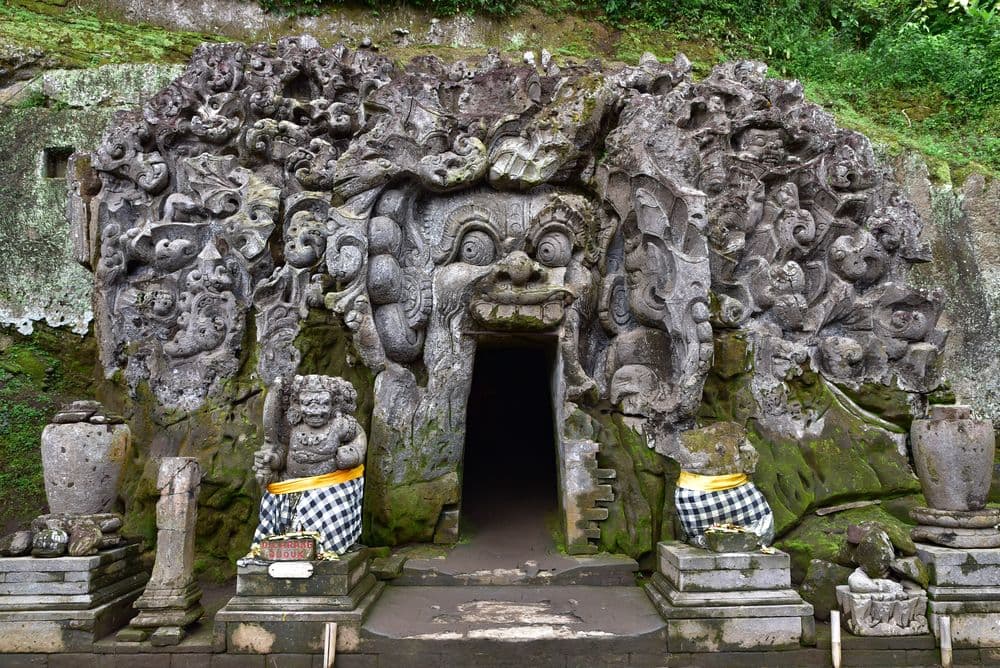
Goa Gajah is a place with astonishing architecture, historical importance and marvelous serenity. It is a significant Hindu archaeological site consisting of an eerie elephant cave, located in Bali . The demon mouth-like entrance cave dates back to the 11th century and had been listed under UNESCO world heritage sites in 1995. It is mostly visited by visitors due to its religious significance and pleasing picturesque lush green paddy fields. The sanctuary used to serve as a monastery of Buddhist and Shiva priests.
The Elephant Cave Bali is named so after the plateau it\'s located upon called "Lwa Gajah \'\'. Visitors would get to listen to a number of interesting stories behind its naming. One of the prominent stories is that it\'s named so because its primary figure was once thought to be an elephant, hence the nickname Elephant Cave. Another story states that it is named after the stone statue of the Hindu God Ganesh (characterised by having the head of an elephant) located inside of the temple.
On entering "T" shape the cave, visitors would take darshan of the statue of lord ganesha on one side and shiva lingam and yoni towards the other. The temple complex also has a statue of Men Brayut or Hariti, a Buddhist mythological character. Visitors would witness the wonderful craftsmanship in Goa Gajah cave whose walls are decorated with carvings depicting jungle, demons and local folktales.
Points Of Interest of Goa Gajah
The temple complex of the Goa Gajah, Bali offers a variety of experiences from spiritual meditations at the Ancient Cave to the marvellous craftsmanship of the Balinese Art. The serene and beautiful lush green paddy fields walk outside the complex are a treat to the eyes. Don\'t forget to click an amazing picture while walking over the majestic stone steps of the Goa Gajah Cave.
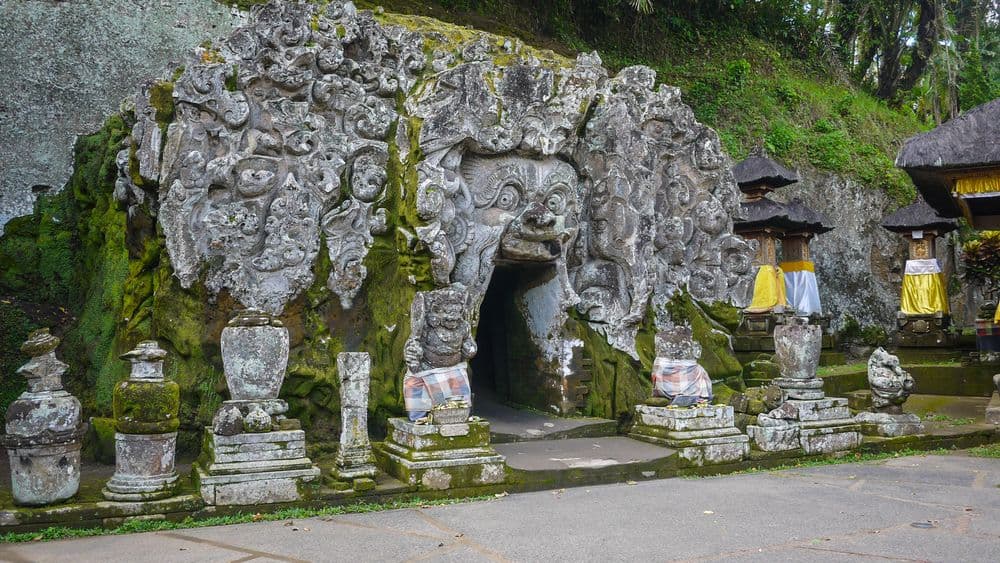
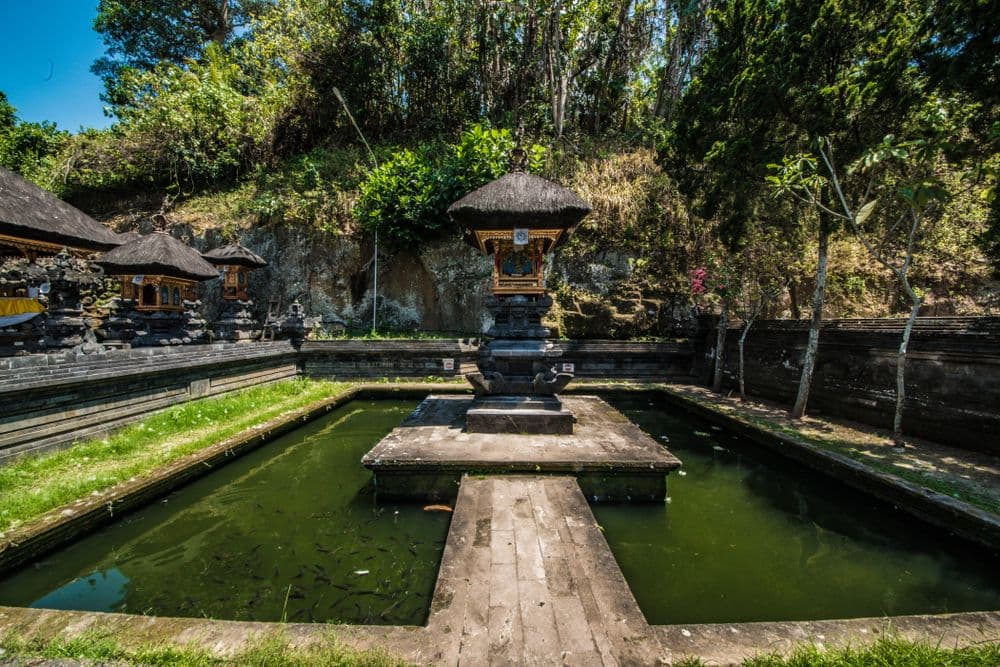
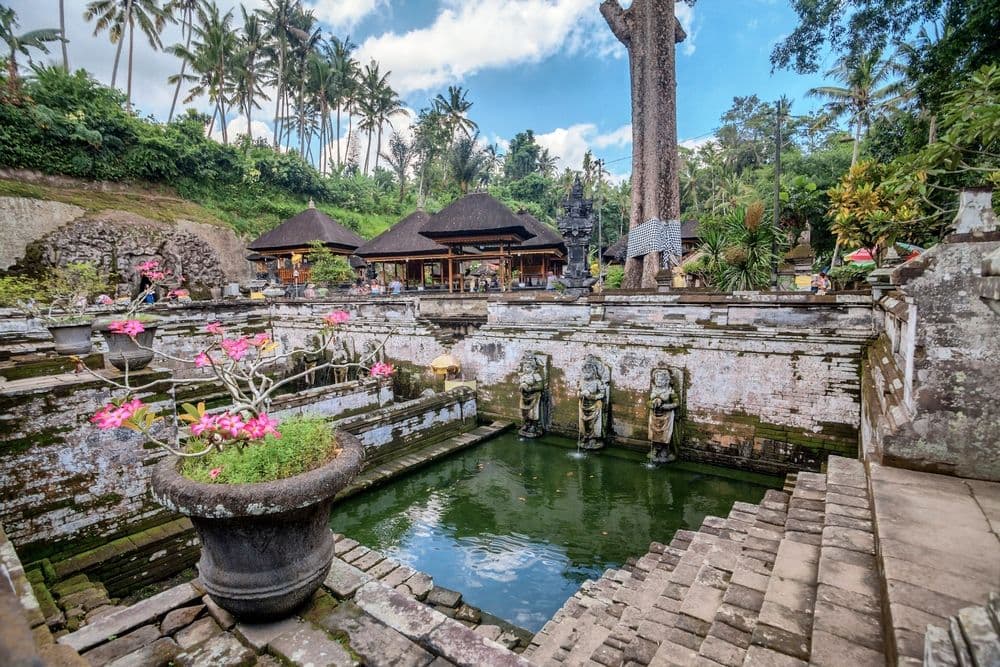
It’s a narrow cave guarded by a wide-eyed demon mouth structure and serves as the main attraction of the Goa Gajah Bali temple complex. Inside the cave there are lingas depicting lord shiva, his son and a yoni depicting his wife Parvati. In a little space by the corner there is a space for meditation and statues of Buddhist goddesses like Ratu Brayut and Ratu Jhempinis. The entrance of the cave has a long flight of stairs. leading to the complex where 7 statues of women are standing (out of which 1 has been destroyed due to an earthquake) holding water pitchers that depict seven holy rivers of India.
On the beautifully decorated walls of the Goa Gajah Elephant Cave witness the culture of ancient Balinese art through the beautiful carvings of jungles, landscapes and monsters on stones. Thus, showing off the amazing craftsmanship skills and techniques of the 11th century. The walls of the caves are decorated with the depiction of the ancient stories of demons, animals and phantoms. All the designs carved over the cave walls have taken inspiration from nature like mountains, scenes, trees, interlaced leaves, stones, and ocean waves.
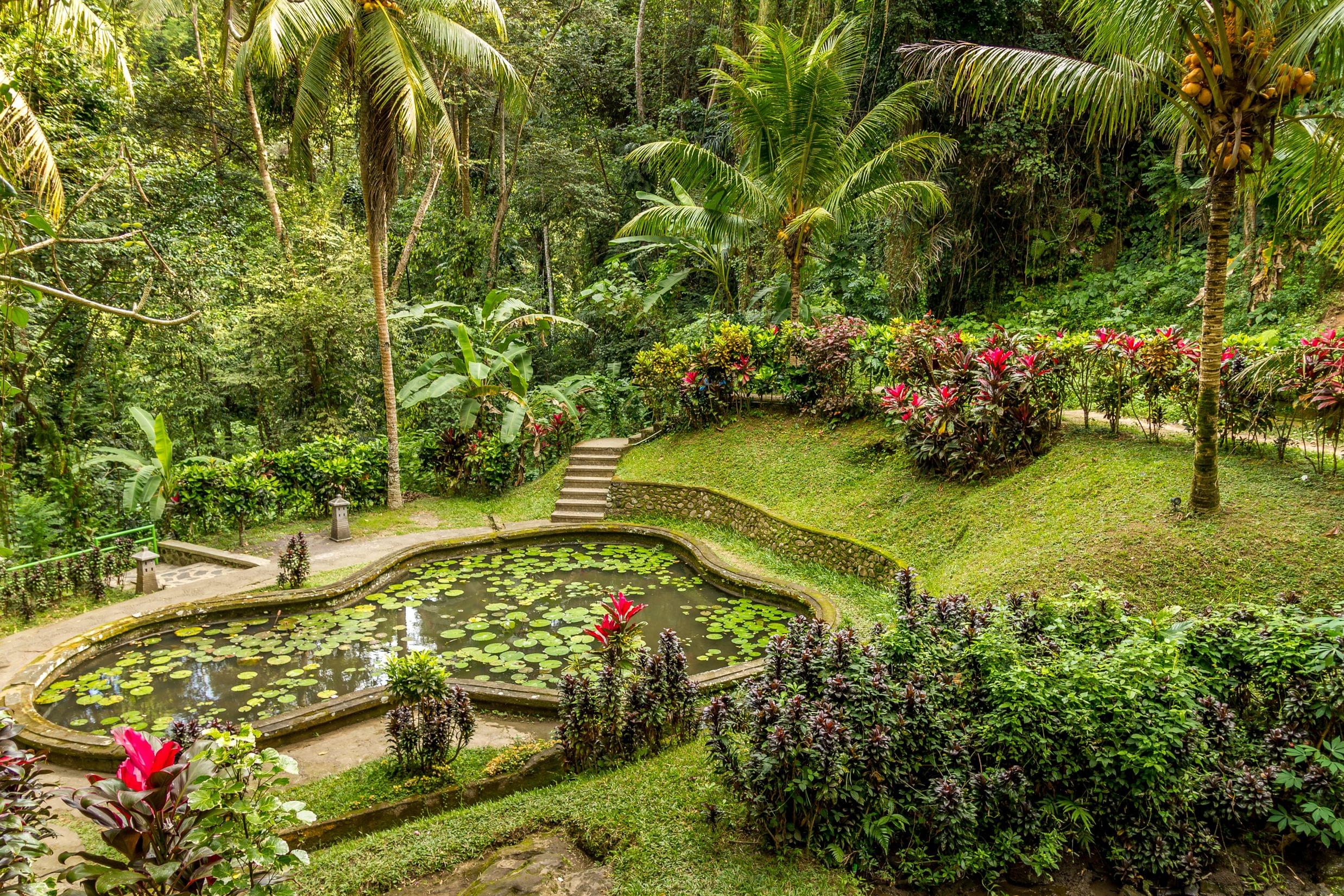
After the spiritual experience at Goa Gajah Cave, take out time to explore the natural splendor of lush green paddy fields. which is as captivating as its historical and religious significance. To grow rice paddies, hills are cut into numerous staircase-steps like fields which gives the surroundings of Goa Gajah a very captivating look. Visit the countryside to take a stroll through the beautiful rice paddies and help learn how rice farmers cultivate and harvest rice. Grab this opportunity to visit a traditional home to learn more about the culture of the Balinese people.
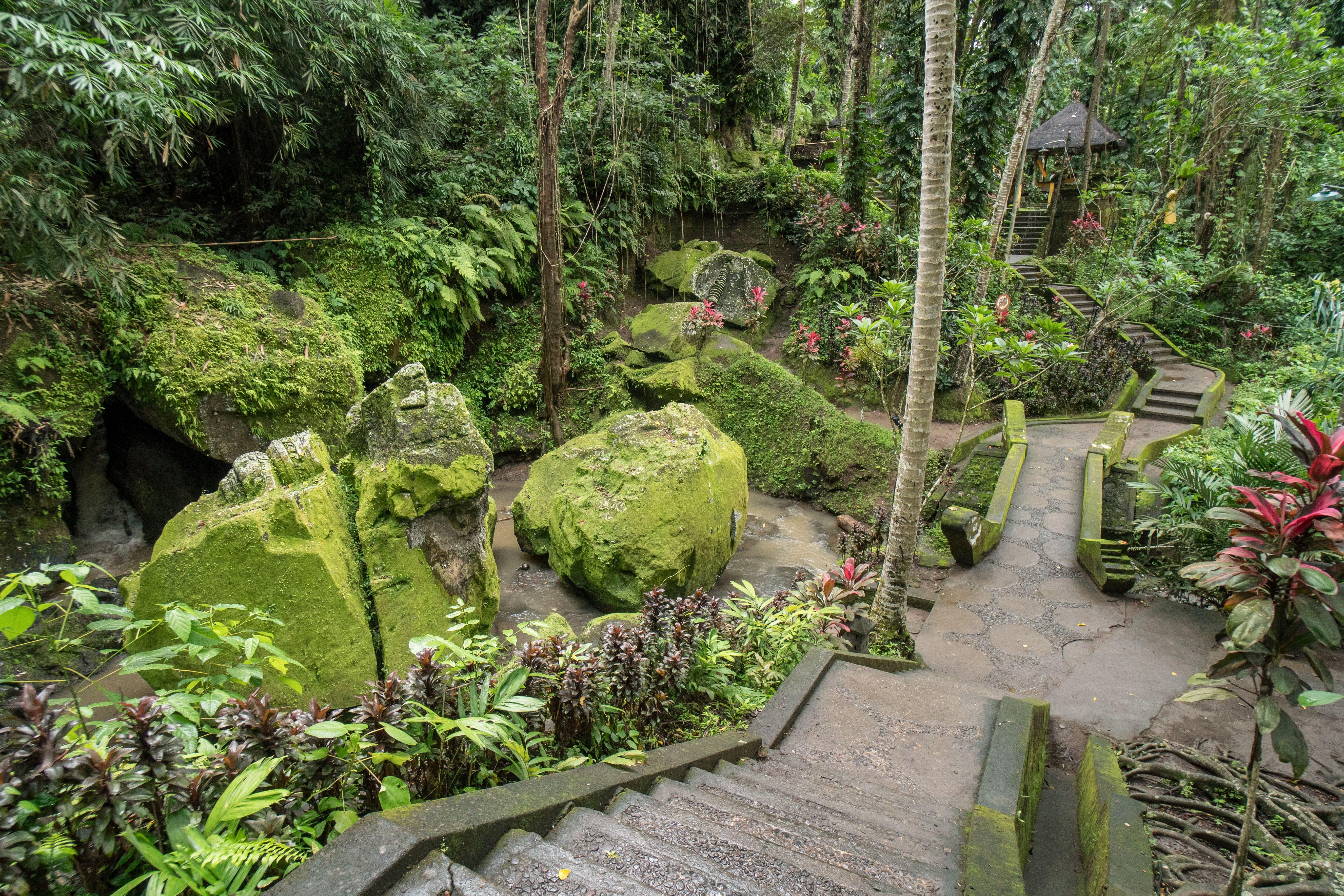
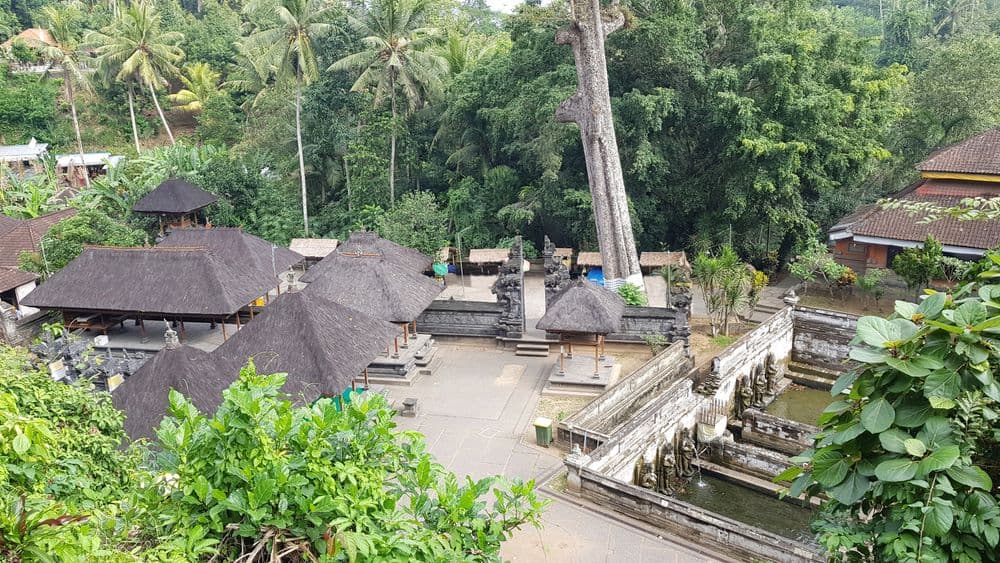
It is a majestically beautiful long staircase laid down as a set of ancient stone steps leading down to the Goa Gajah complex from the parking. These stone steps are covered by lanes of towering trees at both sides making it a serene walk down to the complex . Standing over the top of these stones, one can take an overview of the entire complex of Goa Gajah. Apart from the main and large stone steps there are other stone stairways leading to the sacred pools, meditation area, Elephant Cave, the Buddhist section, rice paddies, and an enchanting forest. The techniques of these stone stairways are great examples of ancient architecture of Bali.
Know before you Go
Plan Your Visit Essential Information Tips for Visiting How To Reach - Goa Gajah temple is located in the Bedulu village in the Blahbatuh district of the Gianyar regency. This is about 3 Km to the East of Ubud town in Bali. As the temple is situated on a cliff and isn’t much connected through public transport facilities, a taxi is the best and often the only way to reach the temple complex. To make the tour more exciting and adventurous one can take a bicycle to drive through the paddy fields.
Timings - Goa Gajah Bali remains open throughout the week between 8:00 AM to 16:00 PM.
Best Time to Visit - The best time to visit the temple is in the early morning when the surrounding is more peaceful and the weather is pleasant. One should visit the Elephant cave during the months of July to October because of the sunny weather. One can also visit the complex of Goa Gajah in November to catch the local festivities.
Dress Code - Because the temple complex holds religious significance a dress code of donning clothes covering full body is advisable. If one forgets to comply with the dress code, consider taking sarongs and waist covers on rent at the entrance of the temple.
Stepping down the main temple complex you will reach beautiful waterfalls and the remains of the Buddha Cave with a beautiful lotus pond.
The tour of the complex would need a local guide to help you enjoy the historical importance of this beautiful architecture of religious significance. It’s advised to set a price for the guides up front and beware of the scams.
Plan your trip to the temple if only you are able to comfortably ascend and descend the stairs as the temple has a number of stone steps.
It’s advisable to wear comfortable footwear as exploration of the complex would require a lot of walking.
- Timings - Goa Gajah Bali remains open throughout the week between 8:00 AM to 16:00 PM.
- Best Time to Visit - The best time to visit the temple is in the early morning when the surrounding is more peaceful and the weather is pleasant. One should visit the Elephant cave during the months of July to October because of the sunny weather. One can also visit the complex of Goa Gajah in November to catch the local festivities.
- Dress Code - Because the temple complex holds religious significance a dress code of donning clothes covering full body is advisable. If one forgets to comply with the dress code, consider taking sarongs and waist covers on rent at the entrance of the temple.
- Stepping down the main temple complex you will reach beautiful waterfalls and the remains of the Buddha Cave with a beautiful lotus pond.
- The tour of the complex would need a local guide to help you enjoy the historical importance of this beautiful architecture of religious significance. It’s advised to set a price for the guides up front and beware of the scams.
- Plan your trip to the temple if only you are able to comfortably ascend and descend the stairs as the temple has a number of stone steps.
- It’s advisable to wear comfortable footwear as exploration of the complex would require a lot of walking.
- There are entry tickets available for both children and adults. Women, however, are forbidden to enter the temple when they are menstruating.
- Follow the strict dress code of covering your body fully to access the temple complex. Avoid offending religious sensibilities and respect the cultural notions of the natives.
- Do not forget to take your cap and water bottle along with you if travelling during the summers to keep yourself hydrated throughout the journey.
- Maintain silence inside the worship area and don\'t disturb the natives going in the temple for their routine worshipping of gods.
- Don\'t litter around the temple complex
- Try to dress yourself in full body covering clothes. One can also get sarongs and waist covers at the entrance.
Photo Gallery